Cleaning CPAP Equipment: What to Wash and What to Keep Dry
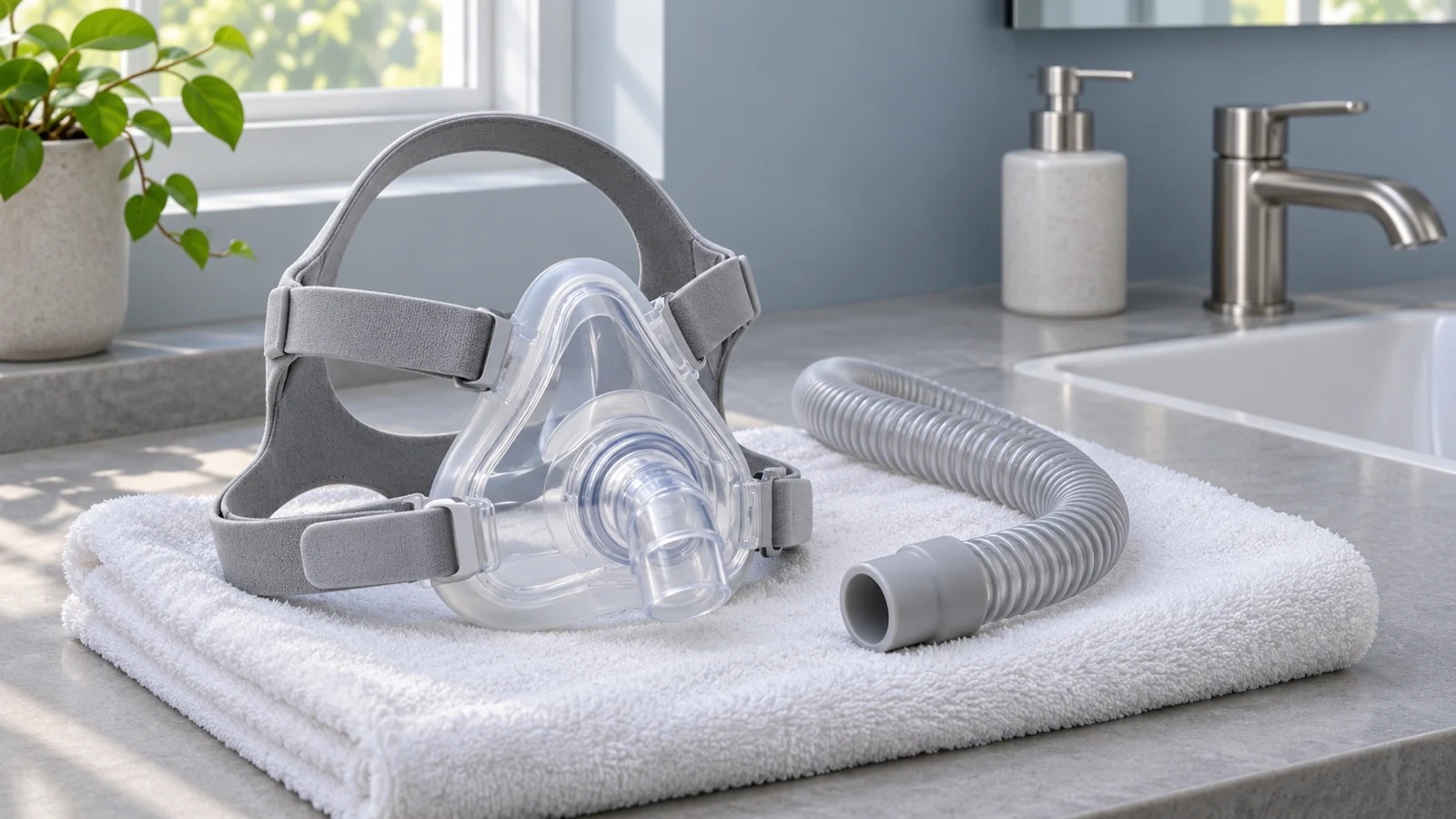
A CPAP setup has parts that can usually be washed and parts that need to stay dry. The quickest way to make cleaning manageable is to look up the instructions for your exact machine and mask, then note which parts need attention and how often.
Separate the washable parts from the powered unit
Many removable masks, hoses, and water chambers can be cleaned with mild soap and water. Check your user manual for instructions on taking them apart, which cleaning products are suitable, and how often to wash them. Rinse and let washable parts air dry before reassembly as directed. Only use a dishwasher if the instructions specifically say that the part is dishwasher-safe.
Keep the powered unit and cord out of water. Follow the manual for wiping the outside. Check the filter type before doing anything with it. A disposable filter may need replacement, while a reusable one may have separate washing instructions.
Be cautious about add-on cleaners
The FDA says devices marketed as CPAP cleaners are unnecessary for routine cleaning. Ozone or UV can damage some parts, and breathing leftover ozone can cause symptoms such as coughing or trouble breathing. An add-on authorized for specific accessories still does not replace regular washing. Check with your equipment supplier if you are unsure whether a product is suitable for your setup.
Turn the manual into a checklist
List the mask, hose, humidifier chamber, and filters on a small card. Next to each part, write the schedule from its instructions. Keep the card near the equipment and give washed parts enough time to dry before bedtime. If you see damage, persistent residue, or a part that will not fit back as expected, ask your supplier how to handle it before use.
References
This article provides general health education. Use the instructions for your specific equipment and ask your sleep care team or supplier for help if needed.