At-Home FIT for Colorectal Cancer Screening: What to Expect
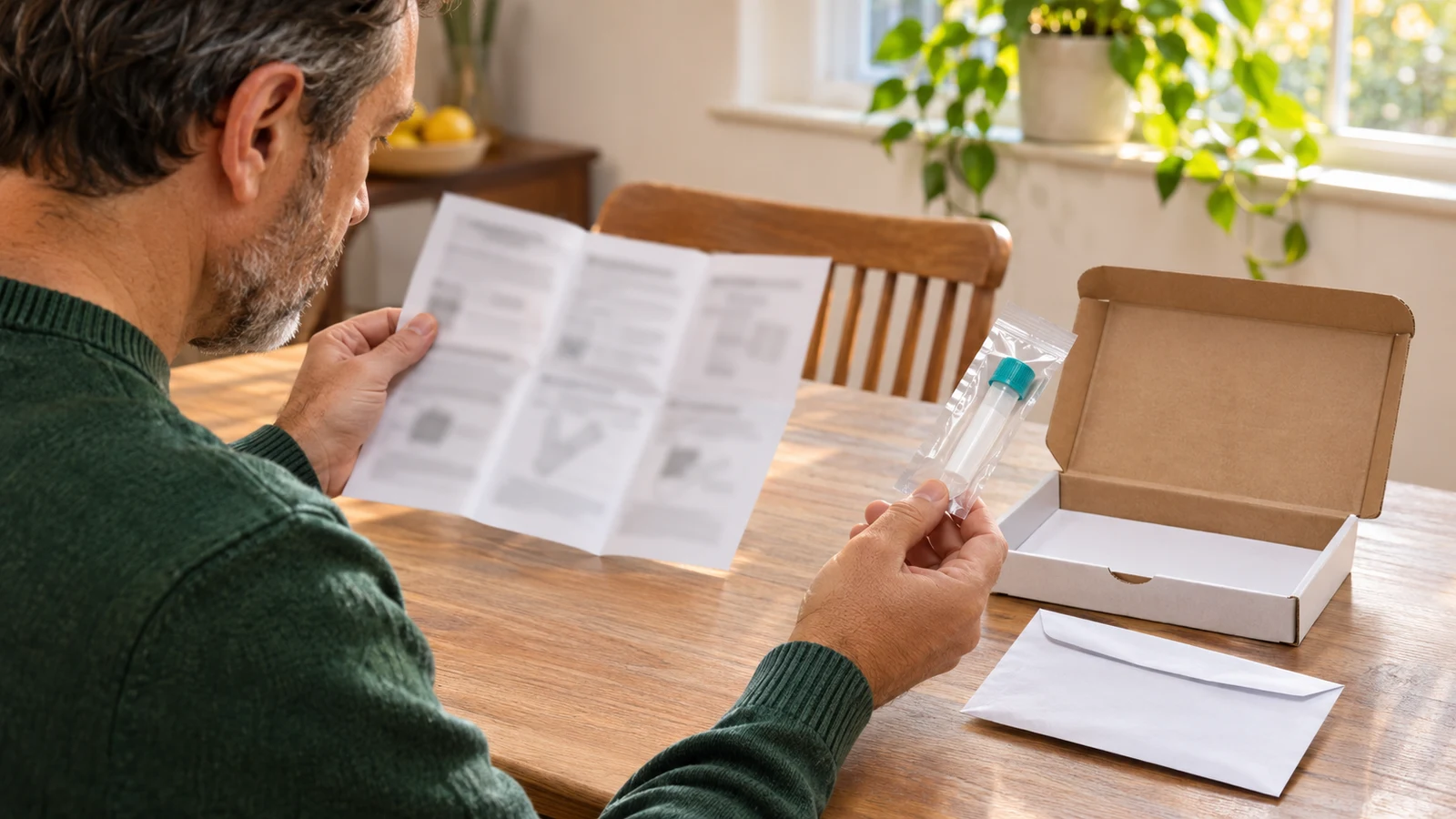
An at-home fecal immunochemical test, or FIT, looks for small amounts of blood in the stool that you might not see. It is one option for routine colorectal cancer screening. If a clinic sends you a kit, take a few minutes to check how to collect the sample, return it, and get your result.
Read the instructions for your kit before you start
Look for the collection device and the return envelope or drop-off instructions. Different kits can ask for different numbers of samples or use a tube instead of a card. Check how the kit asks you to collect the sample, whether you need to write the collection date, and how soon it needs to reach the lab. If the kit is incomplete or unclear, contact the clinic or screening program that sent it.
Know how each result is followed up
A positive FIT means the test detected blood. The test cannot show what caused the bleeding. A follow-up colonoscopy is needed to investigate, so ask who will arrange it and when you should expect to hear from them. Repeating the home test to see if it turns negative can delay that evaluation.
A negative result means the test did not detect blood in the sample. Screening is repeated at intervals. Ask when your next screening is due. If you have symptoms such as visible blood in the stool or a persistent change in bowel habits, tell a clinician even if a screening FIT came back negative.
Ask whether FIT is the right screening option for you
Before choosing a test, share any family history of colorectal cancer and any prior polyps with your clinician. Those details can affect which test and schedule they recommend. If you use a home kit, make a note of when you sent it and who to call if you do not receive your result.
References
This article provides general health education. A clinician can recommend a screening plan based on your history.