Urine Flow Test and Bladder Scan: What to Expect
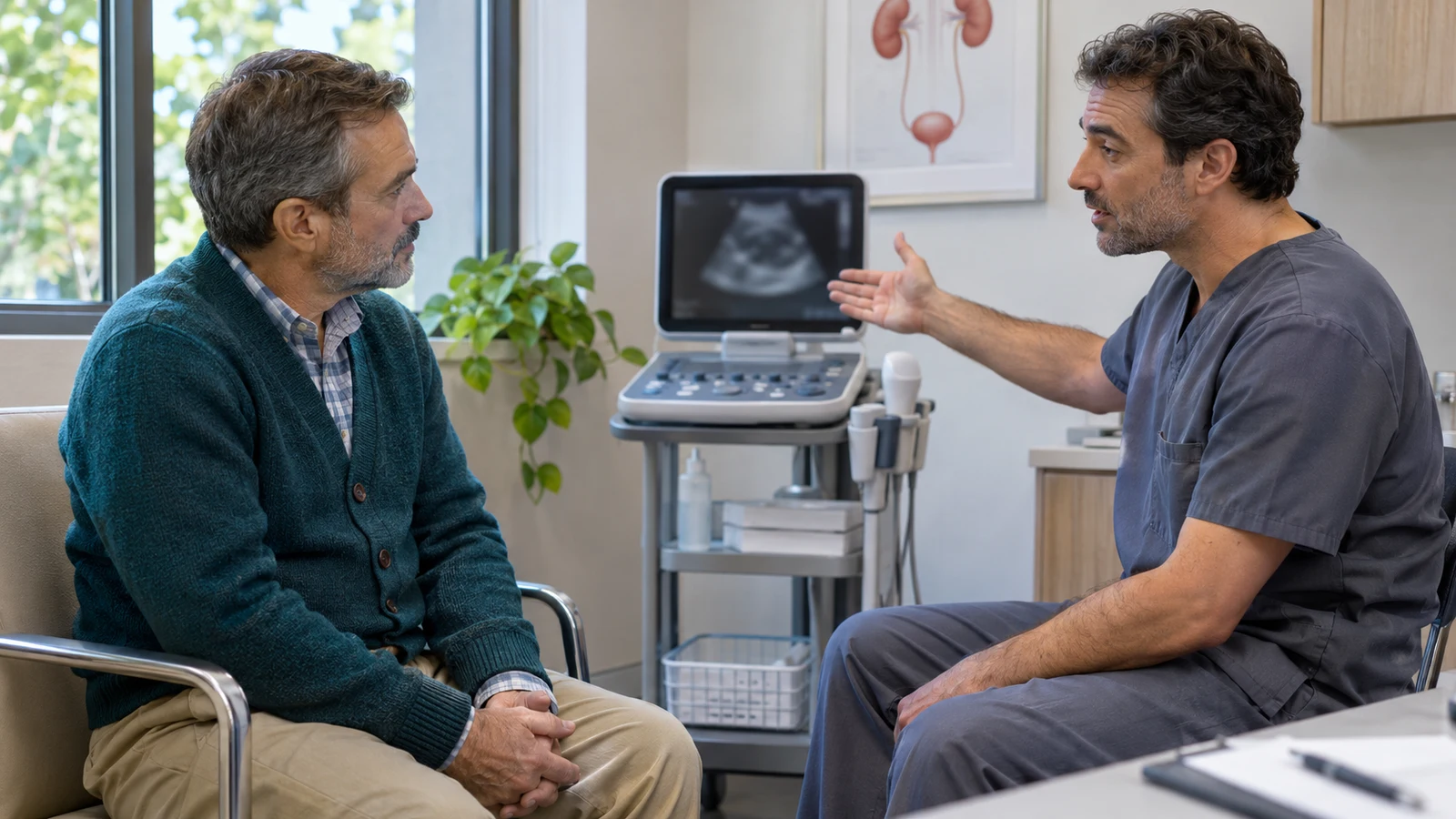
If your urine stream is weak or stops and starts, a clinician may suggest a urine flow test, also called uroflowmetry. The test records how much urine you pass and how quickly it flows. A bladder scan afterward can show how much urine remains.
Check what the clinic wants you to do beforehand
Many clinics ask you to come with a comfortably full bladder. Follow the directions in your appointment letter. Contact the clinic if you have a prescribed fluid limit or are unsure when to drink or use the bathroom. At check-in, tell the team if you are already uncomfortable or need to urinate urgently.
What happens during the two checks
For the flow test, you urinate in private into a device that measures the stream and records the volume. Tell the team if the stream felt different from what you usually experience. The clinic may then use a small ultrasound probe against your lower abdomen to estimate how much urine remains. This estimate is called the postvoid residual.
Ask what the two results show together
A slow stream and urine left in the bladder are different findings. The clinician considers them alongside your symptoms, the amount you passed, and any other tests. Ask whether the test captured a usual bathroom visit and what the results mean for your next appointment. If you suddenly cannot urinate at all, get medical help right away.
References
This article provides general health education. Your clinic can explain how to prepare and what your results mean.