Wearing a Holter Monitor: What to Put in Your Symptom Diary
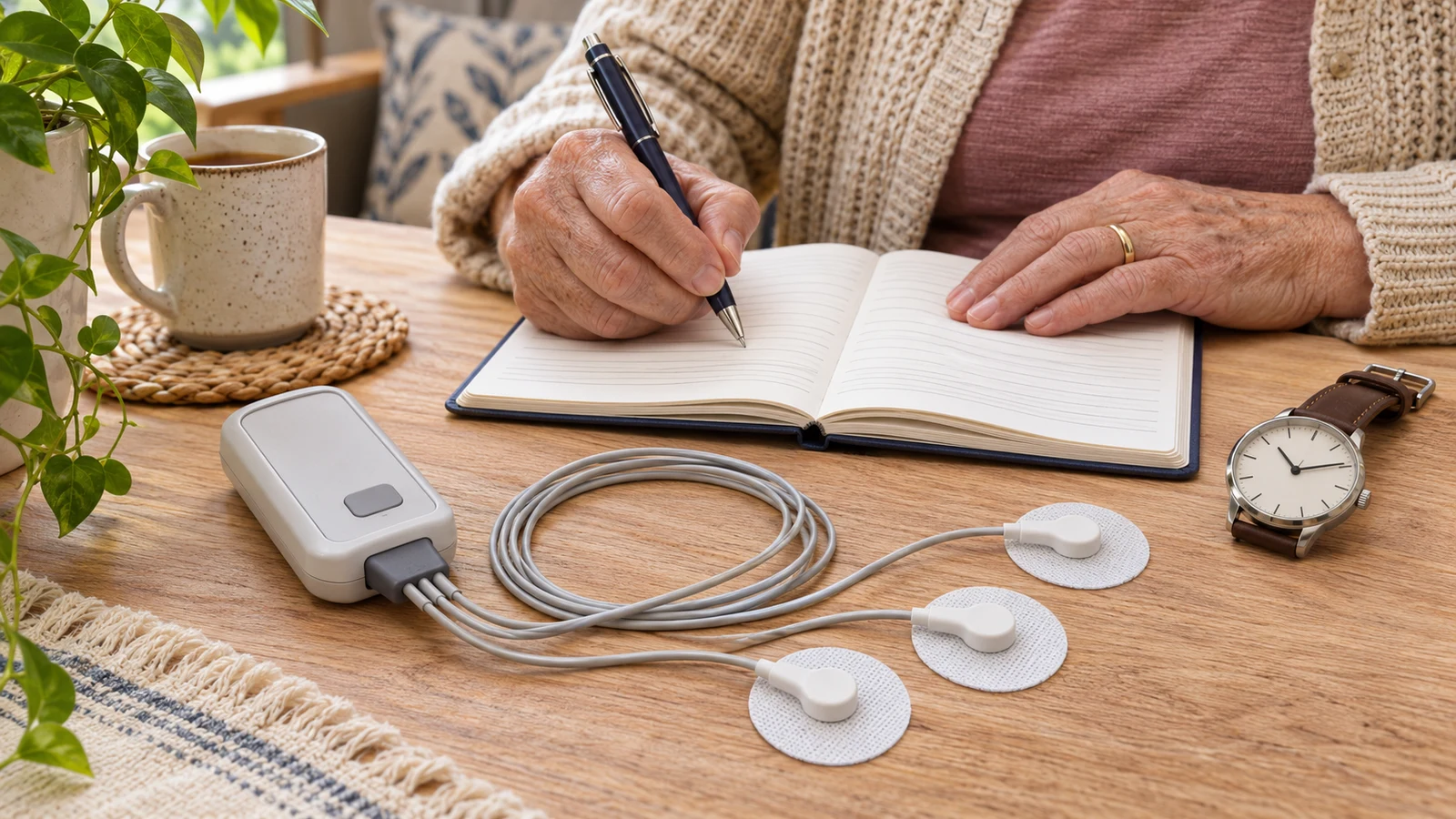
A Holter monitor records your heart’s electrical activity while you go about your day. A clinician may order one when a racing, fluttering, or skipped heartbeat comes and goes. If you feel an episode while wearing the monitor, a note with the time and what you were doing helps the care team compare the sensation with the heart rhythm recorded at that moment.
Ask how to use your monitor before you leave
With a traditional Holter monitor, a technician attaches small adhesive sensors to your chest and connects them to a portable recorder. Tell the technician if medical tape or adhesives have irritated your skin before. Ask how long to wear the device, whether it has an event button, and what to do if a sensor comes loose. Follow the instructions for your specific device, including when it needs to stay dry.
Record the time, activity, and sensation
Use the diary or recording method your clinic provides. Write down the time the symptom started, how long it lasted if you can tell, and what you were doing. A note such as “3:15 p.m., walking upstairs, brief flutter and lightheadedness” is easier to match to the recording than “felt strange in the afternoon.” If your clinic asks you to press an event button, use it as instructed and keep the written note as well.
Know when to seek help and when to expect results
Seek emergency care if you currently have palpitations with chest pain, shortness of breath, or feeling faint. A diary entry can wait in that situation. At the end of the test, return the monitor and diary as directed, and ask who will explain the results and what the next step may be if you had no symptoms while wearing it.