Spirometry: Why the Clinic May Repeat the Test After an Inhaler
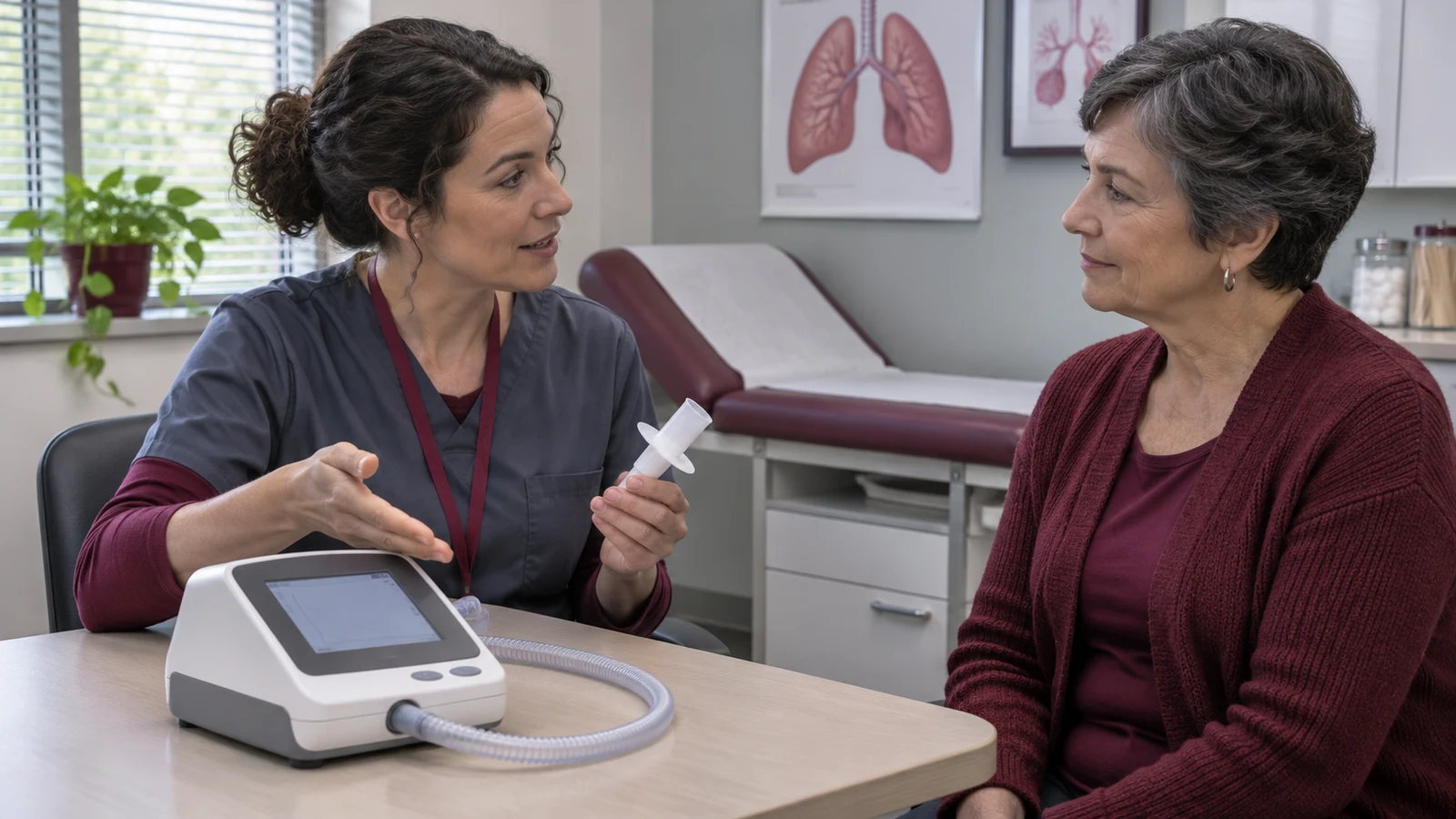
A spirometry appointment may involve two sets of breathing measurements, one before an inhaler and one after. Spirometry measures how much air you can blow out and how fast you can blow it out. Comparing the two sets lets the clinic see whether a medicine that opens the airways changes those measurements.
What the first set of measurements is like
You usually sit in front of the machine and seal your lips around a mouthpiece. The technician coaches you to fill your lungs, then blow out hard and fast and keep blowing until asked to stop. Expect several tries, with rests as needed. Repeating the maneuver helps the technician see whether the readings are consistent. Tell them if you feel lightheaded or need a break.
Why you may be asked to do it again
The clinic may give you a bronchodilator, a medicine that relaxes muscles around the airways. After it has had time to work, you repeat the breathing maneuvers. Your clinician compares measurements such as the amount of air you blow out in the first second, called FEV1. Ask which values changed and what the result means alongside your symptoms and medical history. An inhaler given during testing does not by itself mean you will need a long-term prescription.
Check what to do with your usual inhalers
Call the testing clinic ahead of time if the preparation instructions are unclear. Whether to use your usual inhalers before the visit depends on the reason for the test and the medicines you take. Have the inhaler names handy when you call. Bring a medication list and tell the technician when you last used each inhaler. If you are unwell or have recently had a chest infection, ask the clinic whether to keep the appointment.