Saturated vs. Unsaturated Fat: Everyday Food Swaps for LDL Cholesterol
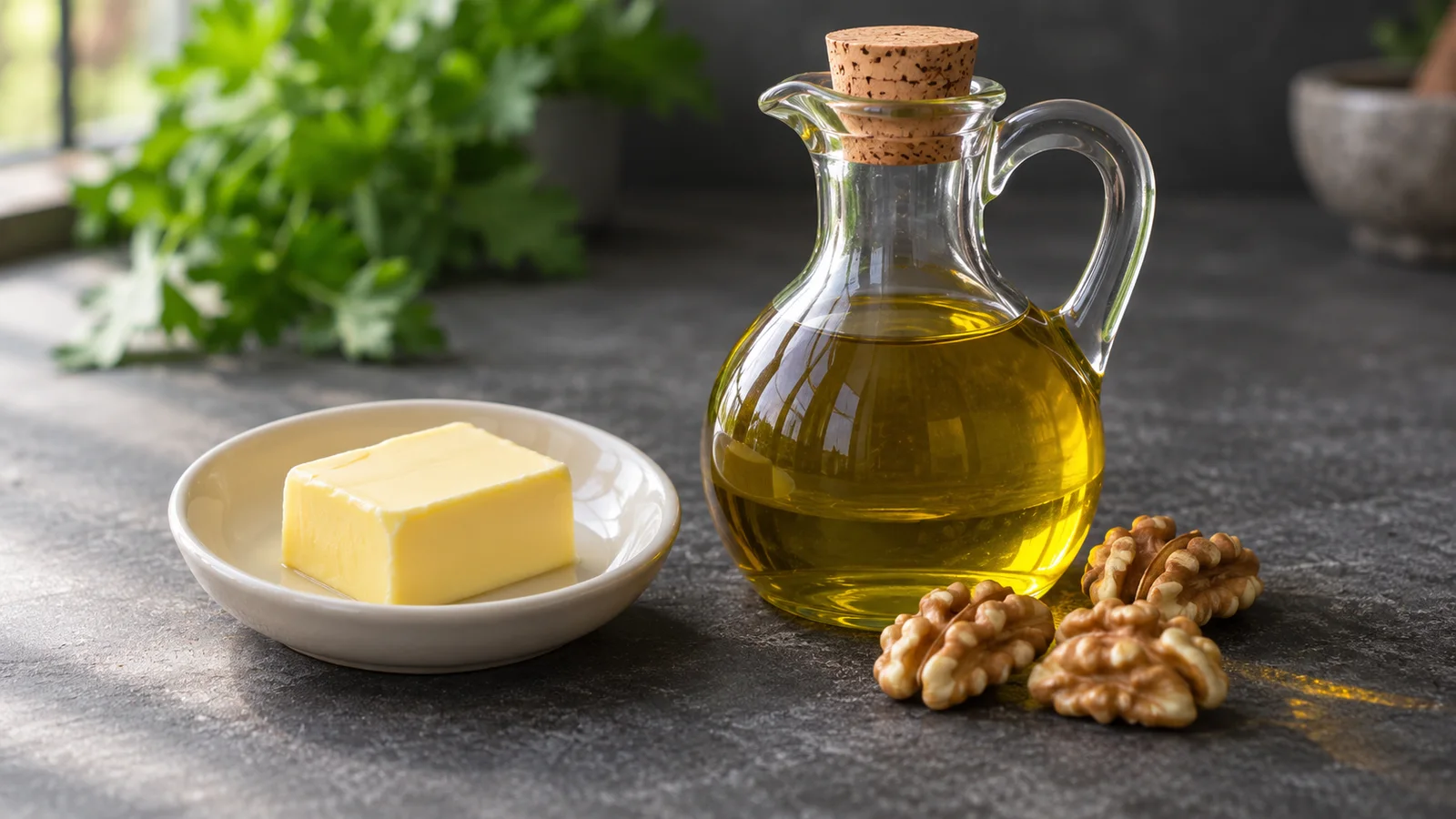
Butter and olive oil can both make a pan of vegetables taste better. They supply different proportions of fatty acids, though, and using one in place of the other can change the amount of saturated fat you eat over a week. That matters because higher saturated fat intake can raise LDL cholesterol, one of the measurements clinicians use to estimate cardiovascular risk. The most practical place to start is with a food you already use often and a replacement that serves the same purpose in your kitchen.
Readers browsing Scott Davis’s cholesterol resources can see the product overview for The Oxidized Cholesterol Strategy. The discussion below draws on public health guidance and clinical research about dietary fats and LDL cholesterol.
What changes when you swap fats?
Foods usually contain a mixture of fats. Butter, fatty cuts of meat, cream and coconut oil contribute substantial amounts of saturated fat. Olive and canola oils are rich in unsaturated fats, as are foods such as walnuts, seeds and avocados. Monounsaturated and polyunsaturated fats are two types of unsaturated fat. The mix differs by food, so this is a way to compare ingredients by their main contribution to your meals.
LDL particles carry cholesterol in the bloodstream. Routine LDL cholesterol, reported as LDL-C, describes the amount of cholesterol carried in those particles. It differs from oxidized LDL, a term for LDL that has undergone chemical changes. The dietary evidence discussed here concerns LDL-C and cardiovascular outcomes. A change in a standard lipid panel gives clinicians information about circulating cholesterol, and it cannot directly quantify oxidation or tell you whether existing plaque has changed.
The American Heart Association recommends replacing foods higher in saturated fat with foods that provide unsaturated fats. The World Health Organization identifies polyunsaturated fats, plant sources of monounsaturated fats, and naturally fiber-rich carbohydrate foods as suitable replacements. A Cochrane review of longer-term randomized trials found that reducing saturated fat probably lowered the number of combined cardiovascular events. The trials looked at patterns over time. A particular oil or a single meal cannot guarantee the same outcome for an individual.
Think in terms of a replacement
Imagine two people who each start putting walnuts on the table. One keeps eating their usual cheese snack and adds walnuts afterward. The other sometimes replaces the cheese snack with a small portion of unsalted walnuts and fruit. Both people are eating walnuts, but only the second has changed what the original snack contributes. Looking at what comes out of the meal makes a swap easier to understand.
This is also why a lower saturated fat label tells only part of the story. For example, replacing a buttery snack with a sugary pastry made using less butter may lower one number on the label while leaving little fiber in the meal. Whole grains, pulses, fruit and vegetables are examples of the naturally fiber-rich carbohydrate foods in the WHO guidance. When a meal calls for a fat, an oil rich in unsaturated fats may serve the same cooking function as butter.
The cuisines you already enjoy can guide the choice. Olive oil works well in many dressings and vegetable dishes. A neutral-tasting oil such as canola may suit dishes where you want the spices or aromatics to stand out. Beans can take the place of some fatty meat in a chili or soup and still give it body. How often you repeat the swap matters more for your usual intake than how many ingredients you change at once.
Read the label with the portion in mind
Start with the serving size and the grams of saturated fat. One spread might give information per tablespoon and another per teaspoon. Convert both to the amount you would actually use before comparing them. As an arithmetic example, if the label lists 3 grams of saturated fat per tablespoon and you use two tablespoons in a dish split evenly among four people, the spread adds 1.5 grams per portion. The meal can contain other sources as well.
On U.S. Nutrition Facts labels, the FDA describes 5% Daily Value or less per serving as low and 20% or more as high. Those figures are a quick comparison tool. They refer to one labeled serving. If you typically use more than that amount, the contribution increases. Actual grams are particularly helpful when a single dish contains several products, such as a spread, a sauce and a cheese topping.
A package may emphasize “plant-based,” “dairy-free” or “made with olive oil.” Those words can tell you about ingredients or dietary preferences, but the saturated fat line reflects the blend as sold. A spread made with coconut or palm oil may have more saturated fat than you expect. Look at the serving size first and then check the grams to see what the substitution would change in your own recipe.
Check the rest of the label when you compare two packaged foods. Some spreads and prepared sauces differ considerably in sodium, and a packaged snack may contain added sugars. The saturated fat number answers one question about the swap. The other nutrients help you decide how the food fits alongside everything else you eat. Store brands can be useful comparison points because you can line up similar products and check both the serving information and the price.
Start with a meal you make on repeat
Pick one frequent use before buying several new ingredients. If you cook eggs or vegetables in butter most mornings, count how much you normally put in the pan and compare it with a measured amount of liquid oil. If you want some buttery flavor, you might choose a smaller amount for finishing the dish. The effect on saturated fat depends on how much of each ingredient ends up in the food.
For lunch, consider the jobs that cheese, processed meat or a creamy spread do in a sandwich. A bean spread adds creaminess, and sliced cucumber or a little vinegar can supply some of the crunch and tang. At dinner, compare the amount of butter or cream in a regular sauce with an alternative that uses vegetable stock, herbs and an unsaturated oil. The examples are starting points for finding a swap you enjoy enough to keep.
Include foods from outside your kitchen in the same exercise. If coconut cream is a feature of a takeaway you enjoy, a different dish on some visits may be easier than recreating the original flavor at home. A menu name rarely tells you how much fat a restaurant uses. When nutrition information is available, compare like-sized portions. When it is unavailable, focus on the regular choices you can see and measure, such as the oil or spread you buy every week.
Baking is a case where the kind of fat affects the result as well as the nutrition. Butter can give a cookie or pastry its structure, so exchanging it for the same volume of oil may change the texture. For something you make every week, a recipe designed around a liquid oil can be easier to repeat than adapting an existing one. The familiar butter recipe may still make sense on the occasions when its texture matters most to you.
Use your next cholesterol conversation to put changes in context
LDL-C responds to more than one part of your diet. Genetics, health conditions and medications can influence it too. A change in your home cooking is worth describing in concrete terms at your next appointment. For example, you could mention that you switched the fat used for weekday cooking and changed a snack you ate four times a week. Those details help a clinician or dietitian work out what you have tried and what might be practical to address next.
Ask which lipid measurement your clinician is following and when another test would be useful. A repeat result is easier to interpret alongside the dates of sustained dietary changes and any medication changes. If you take a cholesterol-lowering medicine, continue using it as prescribed and bring questions about your treatment to your prescriber. People with very high LDL-C, early heart disease in the family or existing cardiovascular disease can ask how those factors affect the plan for follow-up.
Before your next grocery trip, identify one product or meal where a regular substitution would matter. Check the portion you use, pick an option you like, and see whether it fits your week. The book details for The Oxidized Cholesterol Strategy are available separately for readers who want to review the guide. For questions about your LDL result or a target that fits your health history, bring the lipid panel and a short description of your recurring meals to your care team.
Sources and further reading
- American Heart Association, Saturated Fats
- World Health Organization, Recommendations on Saturated and Trans-Fatty Acids
- Cochrane, Reduction in Saturated Fat Intake for Cardiovascular Disease
- U.S. Food and Drug Administration, How to Understand and Use the Nutrition Facts Label
- MedlinePlus, Cholesterol Levels
RECOMMENDED READING
A practical guide for readers interested in oxidized cholesterolA guide to oxidized cholesterol

The Oxidized Cholesterol Strategy
A digital guide by Scott Davis. Review the strategy overview and contents before deciding whether it is relevant to you.
- Topic: oxidized cholesterol
- Author: Scott Davis Health Guides
- Format: digital guide
 Secure checkout through ClickBank
This page contains affiliate links. We may earn a commission if you purchase through them, at no extra cost to you.