What Does Nail Fungus Look Like? 🦶
This article is written by mr.hotsia, a long term traveler and storyteller who runs a YouTube travel channel followed by over a million followers. Over the years he has crossed borders and backroads throughout Thailand, Laos, Vietnam, Cambodia, Myanmar, India and many other Asian countries, sleeping in small guesthouses, village homes and roadside inns. Along the way he has listened to real life health stories from locals, watched how people actually live day to day, and collected simple lifestyle ideas that may help support better wellbeing in practical, realistic ways.
In humid towns, shared bathrooms, bus station washrooms, and long days inside shoes, one quiet foot problem appears again and again: a nail that no longer looks like itself. It may start with a faint pale spot, a yellow corner, or a nail edge that suddenly looks rougher than usual. Many people ignore it at first. They think it is just age, a bump to the toe, or an old shoe rubbing too hard. But one of the most common explanations is nail fungus, also called onychomycosis. Major medical sources describe it as a fungal nail infection that often begins as a white or yellow-brown spot under the tip of the nail and can later make the nail thick, ragged, brittle, discolored, or partly separated from the nail bed.
So what does nail fungus actually look like?
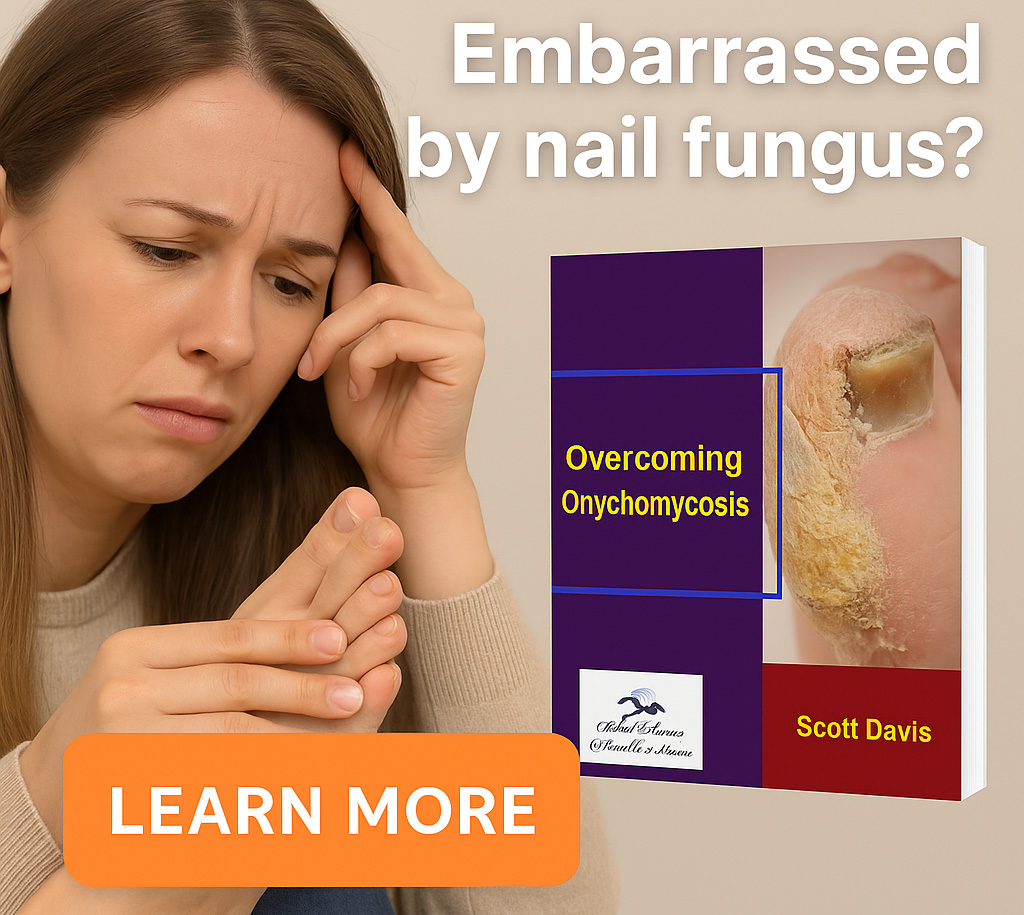
The short answer is this: nail fungus often looks like a nail that has become yellow, white, brown, thickened, brittle, crumbly, rough-edged, or lifted away from the skin underneath. It may affect one nail or several, and it is much more common on toenails than fingernails.
It Often Starts Small
One reason people miss nail fungus is that it often begins quietly. Mayo Clinic says it can start as a white or yellow-brown spot under the tip of a fingernail or toenail. That means the earliest sign may be only a small patch of odd color near the front or side of the nail, not a whole dramatic change all at once.
At this stage, the nail may still feel fairly normal. It may not hurt. It may not look especially thick. It may simply seem a little cloudy, faded, or stained. That is why many people shrug it off. Nail fungus is rarely a marching band. It is more like a quiet stain spreading across a shirt one slow drop at a time.
The Most Common Colors
If someone asks what color nail fungus looks like, the most useful answer is that it can vary. The American Academy of Dermatology says nail fungus can cause one or more nails to turn yellow, white, brown, or another color. Mayo Clinic and NHS guidance also describe infected nails as discolored, often with yellowish or white changes.
In real life, many fungal toenails look:
-
yellow
-
yellow-brown
-
dull white
-
cloudy
-
brownish in patches
-
uneven in color
Sometimes the whole nail changes color. Sometimes only one side looks affected. Sometimes the color is strongest near the tip. The exact shade can vary, but the main theme is this: the nail stops looking clear, even, and healthy.
Thickened Nails Are Very Common
Another classic sign is thickening. A fungal nail often becomes thicker than normal, and that can make it harder to trim. NHS, Mayo Clinic, and AAD all describe thickening as a common sign.
This matters because many people first notice the thickness before they notice the color. They try to cut the nail and realize it has become hard, dense, and stubborn. Clippers may struggle. The nail may feel more like a small shield than a normal thin nail. In shoes, that extra thickness can also create pressure and discomfort.
If a healthy nail is like a neat roof tile, a fungal nail can begin to feel like old wood that has absorbed too much rain.
Brittle, Crumbly, Ragged Edges
Nail fungus often changes the texture as much as the color. Mayo Clinic says the nail may become ragged, and AAD notes that the infected nail may lift and crumble. NHS materials also describe fungal nails as brittle.
This means the nail may look:
-
chipped at the edges
-
rough instead of smooth
-
brittle and easier to break
-
crumbly, with small pieces coming off
-
uneven when you run a finger across it
Some nails look almost chalky. Others look flaky at the corners. Some seem to split into layers. Instead of one clean surface, the nail starts to look weathered, tired, and messy.
The Nail May Lift Off the Nail Bed
One of the more obvious signs is when the nail begins to separate from the nail bed, the skin underneath the nail. Mayo Clinic says an infected nail may separate from the nail bed, and AAD mentions lifting as one of the signs.
When this happens, the nail may look slightly raised, loose, or detached at one end or side. There may be an air gap underneath. The color underneath may appear whitish, yellowish, or dirty-looking. It can look as though the nail is no longer glued down properly.
This is often when people stop thinking, “Maybe it is nothing,” and start realizing the nail has truly changed.
Soft in Some Cases, Hard in Others
People often imagine fungal nails are always hard and thick. That is common, but not universal. One NHS hospital overview says fungal nail infections may make nails feel or look thicker than usual, soft, crumbly, or discoloured.
So the texture can vary. Some nails become hard and dense. Some become soft and fragile. Some do both in different parts. A fungal nail is not always one single pattern. That is why the condition can be overlooked or confused with something else.
It Usually Affects Toenails More Than Fingernails
AAD says nail fungus can affect toenails or fingernails, but it is much more common on toenails. Mayo Clinic and NHS patient guidance say the same.
This matters for appearance because toenails often show the more classic picture: thick, yellow, rough, and slow-growing. They live in warm, enclosed shoes, which gives fungus a rather cozy neighborhood. Fingernails can get fungal infection too, but when people talk about the classic “fungal nail look,” they are usually picturing a toenail.
It May Affect Part of the Nail or the Whole Nail
Some fungal nails involve only the outer edge at first. Others gradually spread until most of the nail is changed. A hospital NHS overview notes that the symptoms may cover part of the nail or the whole nail.
This is useful because people often expect all-or-nothing. They assume that if the whole nail is not yellow, it cannot be fungus. But fungal nail infection often begins in one corner or one end, then slowly moves deeper and wider over time.
So a single small discolored patch should not be ignored just because the rest of the nail still looks reasonable.
Sometimes the Skin Around It Looks Different Too
AAD’s overview notes that common signs can include redness on the surrounding skin in some cases. Other patient materials mention that nearby skin may also have fungal infection, especially between the toes.
That means the full picture may not be only the nail itself. You might also see:
-
redness around the nail
-
scaling nearby
-
peeling skin between the toes
-
cracking or itching consistent with athlete’s foot
This is one reason fungal nail infection and athlete’s foot often seem to travel as a pair.
Usually Painless at First
A fungal nail often looks ugly before it feels serious. NHS-style sources say fungal nail infections are usually not serious, and some leaflets note they are often pain-free at first.
That lack of pain is one reason people leave it alone for so long. A painful tooth gets attention. A yellow toenail usually gets a sock.
But even if it does not hurt early on, a thick, lifted, distorted nail can become uncomfortable later, especially in tight shoes or during walking.
What a Typical Fungal Toenail Looks Like in Plain English
If you want the plainest possible description, a typical fungal toenail often looks like this:
A nail that used to be clear and smooth becomes yellow or brownish, thicker than normal, rough around the edges, brittle or crumbly, and sometimes partly lifted from the skin underneath. It may look dull rather than shiny. It may seem uneven or misshapen. It may be harder to cut than before.
That is the classic picture.
Not Every Ugly Nail Is Fungus
This part is important. A nail can look thick, yellow, rough, or damaged for reasons other than fungus. Mayo Clinic notes that healthcare professionals may examine the nail and sometimes test scrapings or clippings because other conditions can mimic fungal nail infection.
So while fungal nails often look yellow, thick, brittle, or lifted, those features are suggestive, not absolute proof. Trauma, psoriasis, aging-related changes, and pressure from shoes can sometimes produce a surprisingly similar look.
That is why “looks like fungus” and “is definitely fungus” are cousins, not twins.
When It Looks More Advanced
If the infection continues, the nail can become more obviously abnormal. Older NHS podiatry leaflets describe advanced fungal nails as yellow-brown, thickened, crumbly, and separated from the nail bed. Some leaflets also note that if untreated, more toenails can become thickened and yellow.
An advanced fungal nail may look:
-
thick like a shell
-
distorted in shape
-
darker or more uneven in color
-
split or flaky at the ends
-
partly detached
-
unsightly enough that people avoid open shoes
At that point, the nail is no longer whispering. It is making a fairly direct announcement.
What Improvement Looks Like
This is useful because many people do not know what to look for once treatment starts. AAD’s treatment guidance says that even after the fungus clears, discoloration and other visible signs can remain until the nail grows out.
So a nail getting better does not suddenly turn perfect overnight. Improvement often looks like:
-
a clearer section growing in from the base
-
less new thickening
-
smoother new nail
-
the old damaged part slowly moving outward
The old part of the nail may still look rough for quite a while. The nail is slow. It likes to tell its recovery story chapter by chapter.
A Handy Visual Checklist
If someone asks, “Does this sound like nail fungus?” these are the most typical visual clues from major medical sources:
-
white, yellow, or brown discoloration
-
thicker than normal nail
-
brittle or crumbly texture
-
ragged edges
-
dull or cloudy appearance
-
nail lifting away from the skin
-
sometimes redness or fungal skin nearby
-
usually on toenails rather than fingernails
If several of those are present together, fungal nail infection becomes a very reasonable possibility.
Final Thoughts
So, what does nail fungus look like?
Most often, it looks like a nail that has become discolored, thickened, brittle, rough, crumbly, or partly detached from the nail bed. It may begin as a small white or yellow-brown spot under the tip of the nail, then gradually spread deeper. Toenails are affected more often than fingernails, and the nail may involve only one corner at first or eventually much of the nail.
The most useful thing to remember is that fungal nails often change slowly. They rarely arrive like a storm. They creep in quietly, changing the color first, the texture next, and the shape after that. If a nail becomes yellow, thick, brittle, crumbly, or starts lifting, it may well be fungus, though not every abnormal nail is fungal. A suspicious nail deserves attention, especially if it keeps changing instead of growing out normally.
FAQs About What Nail Fungus Looks Like
1. What color is nail fungus usually?
It is often yellow, white, or brown, though the exact color can vary.
2. Does nail fungus make the nail thick?
Yes. Thickening is one of the most common signs.
3. Can nail fungus make the nail crumbly?
Yes. Fungal nails may become brittle, ragged, or crumbly.
4. Does it start as a small spot?
Often yes. It may begin as a white or yellow-brown spot under the tip of the nail.
5. Can nail fungus lift the nail off the skin?
Yes. The infected nail may separate from the nail bed.
6. Is nail fungus usually on toenails or fingernails?
It can affect both, but it is much more common on toenails.
7. Is every thick yellow nail fungus?
No. Other nail conditions can look similar, so appearance alone is not always enough for a definite diagnosis.
8. Can only part of the nail be affected?
Yes. It may affect part of the nail at first or eventually involve the whole nail.
9. Does nail fungus hurt?
Often it is painless at first, though it can become uncomfortable later if the nail thickens or lifts.
10. What is the simplest description to remember?
Think of a fungal nail as a nail that becomes discolored, thick, brittle, rough, and sometimes lifted from the skin underneath.
Mr.Hotsia
I’m Mr.Hotsia, sharing 30 years of travel experiences with readers worldwide. This review is based on my personal journey and what I’ve learned along the way.

I’m Mr.Hotsia, sharing 30 years of travel experiences with readers worldwide. This review is based on my personal journey and what I’ve learned along the way. Learn more |